Grey walls have become the go-to choice for living rooms, and for good reason. They’re versatile, they hide imperfections better than stark white, and they provide a neutral backdrop that works with nearly any decor style. Whether someone’s aiming for modern minimalism, cozy farmhouse, or classic traditional, grey delivers without boxing them in. But here’s the catch: not all greys are created equal, and the wrong shade can turn a room flat or cold. This guide walks through practical ways to use grey walls in living rooms, from choosing the right undertone to pairing furniture, lighting, and textures that bring warmth and personality.
Table of Contents
ToggleKey Takeaways
- Grey wall living room ideas succeed because grey is a versatile neutral that hides imperfections better than white and pairs seamlessly with nearly any decor style, from modern minimalist to farmhouse traditional.
- The right grey shade depends on undertone and light reflectance value (LRV 50–70 is ideal for living rooms); test samples on walls with different lighting before committing, as undertones shift dramatically between north-facing and south-facing rooms.
- Warm greys with beige or taupe undertones pair beautifully with wood floors and traditional furniture, while cool greys with blue or green undertones harmonize with modern minimalist styles and chrome fixtures.
- Layered lighting using warm white bulbs (2700K–3000K), dimmer switches, and accent lights like picture lamps and LED strips prevents grey walls from appearing flat and reveals their depth and warmth.
- Textural contrast through natural materials, varied textiles (chunky knits, velvet, linen, jute), and accent colors like navy blue, mustard yellow, or emerald green prevents grey living rooms from feeling monochromatic or cold.
- Strategic furniture pairings with wood tones, metallics, and at least one dark anchor piece like a coffee table or media console keep grey living room designs grounded and prevent the space from washing out.
Why Grey Walls Work Perfectly in Living Rooms
Grey sits in that sweet spot between bright and bold, making it one of the most forgiving wall colors. It hides scuffs, fingerprints, and minor drywall flaws better than white or cream, which matters in high-traffic spaces like living rooms.
From a design standpoint, grey is a true neutral, it doesn’t lean heavily warm or cool (though undertones matter, covered next), so it pairs well with wood tones, metallics, textiles, and nearly any accent color. That flexibility is why designers and DIYers alike reach for it when they want a clean slate that won’t clash with existing furniture or future updates.
Grey also reflects light differently than white. Where white can feel sterile or glaring under bright bulbs, grey softens the space without darkening it, especially in shades with a light reflectance value (LRV) above 50. For reference, most mid-tone greys fall between LRV 40–60, giving enough depth to define walls without shrinking the room.
It’s worth noting that grey is forgiving during application, too. Minor roller marks or slight variations in sheen are less visible on grey than on crisp white. For DIYers tackling their first paint job, that’s a practical advantage.
Choosing the Right Grey Shade for Your Living Room
Walk into any paint store and there are dozens of greys, some read blue, others purple, green, or beige once they’re on the wall. The difference comes down to undertones, which are pigments added to create depth. A grey with blue undertones looks crisp and modern: one with beige (sometimes called “greige”) reads warmer and cozier.
Before committing to a gallon, test samples on at least two walls, one that gets morning light and one that’s shaded in the afternoon. Natural light shifts undertones dramatically. A grey that looks perfect in the store can turn icy blue in north-facing rooms or muddy brown in spaces with warm evening light.
LRV (Light Reflectance Value) is printed on most paint chips and measures how much light a color reflects, from 0 (pure black) to 100 (pure white). For living rooms, an LRV of 50–70 keeps the space feeling open while still adding definition. Anything below 40 starts to read as charcoal and can make smaller rooms feel closed in.
If the living room has dark furniture or limited windows, go lighter. If it’s flooded with natural light and has pale furnishings, a deeper grey (LRV 30–50) adds richness without overwhelming.
Warm Grey vs. Cool Grey: Which Is Right for You?
Warm greys have beige, taupe, or slight brown undertones. They pair well with wood floors, leather furniture, and traditional or farmhouse styles. These shades feel cozier and work especially well in rooms with north-facing windows or cooler climates, where a touch of warmth is welcome.
Cool greys lean toward blue, purple, or green undertones. They read sleek and contemporary, pairing beautifully with chrome fixtures, glass, and modern minimalist furniture. Cool greys shine in south-facing rooms with abundant natural light, where the undertones stay crisp instead of turning icy.
A quick test: hold the paint chip next to existing color schemes for living rooms already in the space, flooring, trim, and upholstery. If those elements skew warm (honey oak, rust tones, cream), warm grey is the safer bet. If they’re cool (white oak, black metal, navy), cool grey will harmonize better.
Furniture and Decor Pairings That Complement Grey Walls
Grey walls act as a backdrop, not a statement piece, so the furniture and decor do the heavy lifting. The good news: grey plays well with almost anything, but some pairings are stronger than others.
Wood tones work beautifully against grey. Walnut, oak, and teak add warmth and texture, preventing the room from feeling too monochrome. If the grey leans cool, warmer woods (like cherry or reclaimed barn wood) provide balance. If it’s a warm grey, lighter woods like maple or white oak keep things fresh without clashing.
Upholstery in natural fabrics, linen, cotton, wool, adds softness and depth. A grey sofa on grey walls can work, but it needs contrast in texture (think a nubby linen couch against a smooth matte wall). Layering different shades of grey also prevents the space from feeling flat: charcoal pillows, a light grey throw, and a slate rug create dimension.
Metallics bring polish. Brass or gold hardware, light fixtures, and mirrors warm up cool greys, while chrome, nickel, and matte black keep things modern and sharp. Mixing metals is fine as long as one finish dominates, say, brushed nickel on three fixtures and one brass accent lamp.
Avoid overdoing it with all-white furniture unless the goal is a Scandinavian aesthetic. A little contrast, black legs on a sofa, charcoal trim on cabinetry, keeps the room from washing out. Interior designers on MyDomaine often recommend grounding a grey palette with at least one dark anchor piece, like a coffee table or media console.
Accent Colors That Pop Against Grey
Grey is the ultimate team player, it lets accent colors take center stage without competing for attention. The key is choosing one or two accent hues and repeating them in pillows, artwork, and accessories.
Navy blue and grey is a classic combo. Navy adds depth and sophistication without feeling heavy. It works in both warm and cool grey rooms, and it pairs well with brass or chrome accents.
Mustard yellow brings energy to grey without being too loud. It’s especially effective in rooms with warm grey walls, where the yellow feels cohesive rather than jarring. A mustard throw, a pair of cushions, or a piece of wall art for living rooms can anchor the palette.
Blush pink or dusty rose softens cool greys and adds a subtle warmth. This combo is popular in transitional and modern farmhouse styles. Keep it understated, too much pink can veer into saccharine.
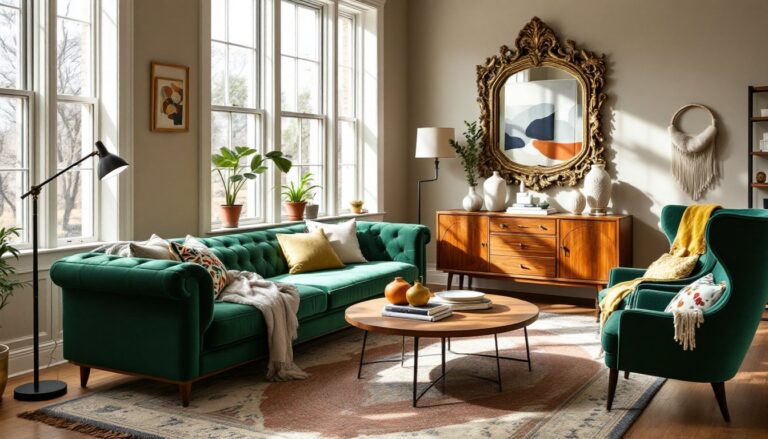
Emerald green looks stunning against mid-tone grey, especially in velvet or matte finishes. It adds richness and a touch of luxury without overwhelming. A single green accent chair or a cluster of plants can do the job.
Burnt orange or terracotta pairs beautifully with warm grey and wood tones. These earthy hues feel grounded and work well in bohemian or eclectic spaces. A terracotta vase, a rust-colored rug, or patterned pillows tie the look together.
For those exploring broader palettes, researching popular paint colors for living rooms can reveal trending accent combinations that work well with grey bases.
Lighting Strategies to Enhance Your Grey Living Room
Lighting can make or break a grey room. The wrong setup turns grey walls dull and flat: the right one brings out depth and warmth.
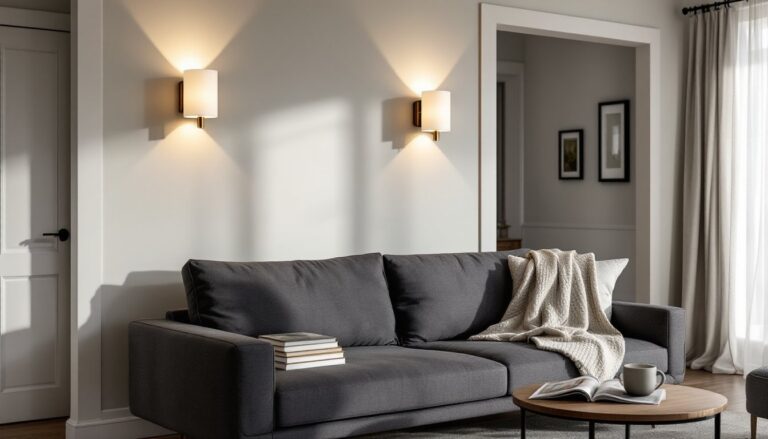
Layered lighting is essential. That means combining ambient (overhead), task (reading lamps), and accent (picture lights, sconces) sources. A single overhead fixture won’t cut it, grey needs multiple light sources to reveal its nuances.
Warm white bulbs (2700K–3000K) are the default for living rooms. They add a cozy glow and prevent grey from looking too industrial. Cool white bulbs (above 4000K) can make grey feel sterile unless the goal is a sleek, modern aesthetic.
Dimmer switches are non-negotiable. Grey shifts in appearance as light changes throughout the day, and dimmers let someone dial in the right amount of light for morning coffee or evening movie night. Most standard switches can be swapped for dimmers in under 20 minutes with a screwdriver and a voltage tester, just kill the breaker first.
Accent lighting highlights textures and breaks up monotony. Picture lights over artwork, LED strips behind floating shelves, or uplighting behind a large plant all add dimension. These don’t need to be complicated, plug-in LED strips work fine and don’t require an electrician.
Natural light should be maximized. Keep window treatments light and sheer during the day to let in as much daylight as possible. If privacy is a concern, top-down/bottom-up shades or sheer panels allow light in while blocking sightlines.
For rooms with limited natural light, consider adding a large mirror opposite the window to bounce light around. According to design experts on Homify, strategic mirror placement can effectively double the perceived brightness in dimly lit spaces.
Textures and Materials to Add Depth and Warmth
Grey walls can read flat if the room lacks textural variety. The fix isn’t more color, it’s more tactile contrast.
Textiles are the easiest starting point. Layer a chunky knit throw over a linen sofa, add velvet pillows, and place a jute or wool rug underfoot. Each material reflects light differently, creating visual interest even within a neutral palette.
Natural materials, wood, stone, rattan, and leather, warm up grey instantly. A live-edge coffee table, a stone fireplace surround, or a leather ottoman all add organic texture that prevents the space from feeling too slick or modern.
Wall texture itself can make a difference. If the room feels too smooth, consider adding board-and-batten wainscoting, shiplap, or even a textured wallpaper on one accent wall. These elements add shadow and dimension that flat drywall can’t achieve. (Note: board-and-batten is a manageable DIY with a miter saw, level, and nail gun, but measure carefully, misaligned seams are obvious.)
Woven and carved elements, rattan chairs, macramé wall hangings, or carved wood shelving, introduce handmade, artisanal appeal. They soften grey’s inherent sleekness and make the room feel lived-in.
Matte vs. gloss finishes also affect texture. A matte or eggshell finish on grey walls feels soft and contemporary. High-gloss grey (rare in living rooms) reflects more light but shows every imperfection. For trim and millwork, a satin or semi-gloss white (or darker grey) creates subtle contrast without harsh lines.
Those pursuing elevated aesthetics often draw inspiration from luxury living rooms that layer multiple textures, plush velvet, polished marble, rough linen, to create a rich, cohesive look even within a neutral grey framework.